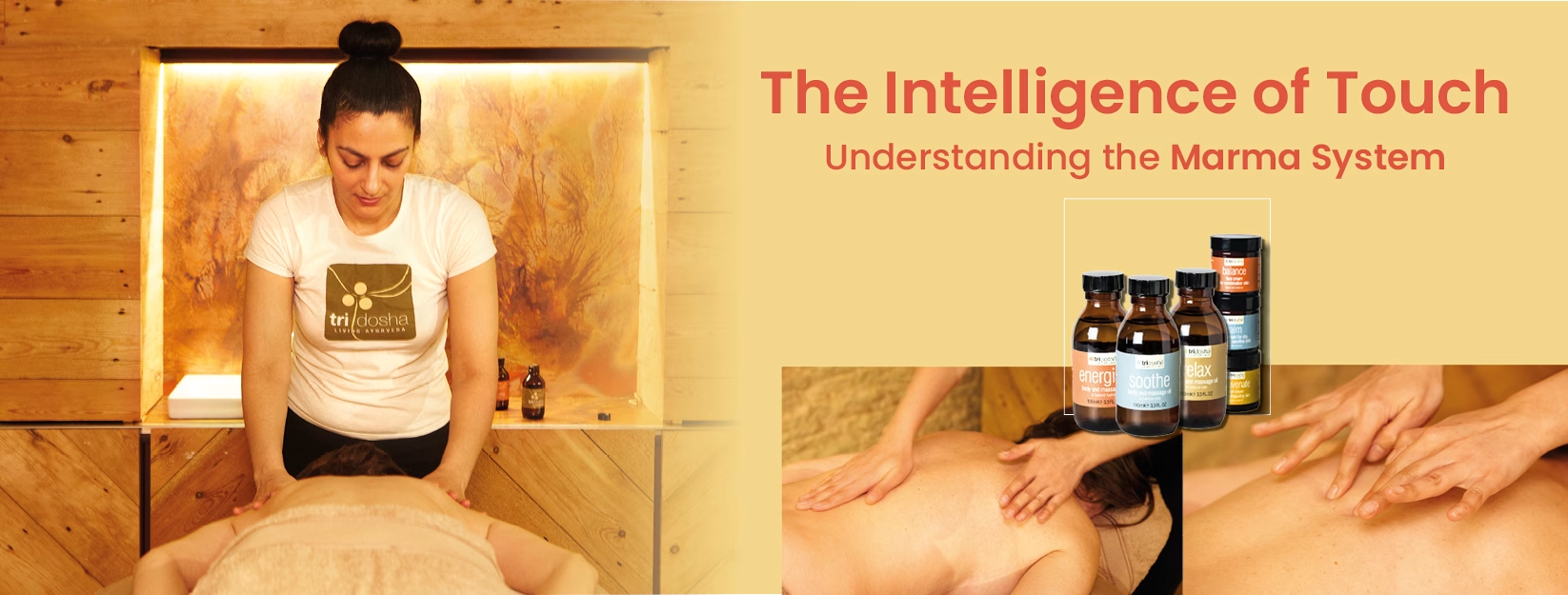
THE INTELLIGENCE OF TOUCH | UNDERSTANDING THE MARMA SYSTEM
At Tri-Dosha, we often return to a simple yet profound truth:
It is not how much you know – it is how deeply you can feel.
Within Ayurvedic bodywork, the marma system offers us a map – but more importantly, it offers us a way of listening.
The 107 marma points are not simply anatomical locations to be memorised. They are meeting places – where structure, energy, and awareness converge. Points through which we access the dialogue between the physical body, the subtle body, and the mind.
For the therapist, this shifts everything.
Beyond Points: A Felt Experience
Traditionally described across the body – from the crown of the head to the tips of the toes – marmas sit within muscles, joints, bones, and connective tissues. Yet to approach them purely structurally is to only see part of the picture.
Each marma holds:
- A physical function (circulation, nerve pathways, joint integrity)
- An energetic quality (movement of prana)
- An emotional resonance (how experience is held and expressed)
When we work with marma points, we are not “doing” to the body – we are entering into relationship with it.
A Practical Way In
With 107 points, it can feel overwhelming at first. But in practice, depth comes not from quantity – but from clarity.
We guide our students to work in layers of understanding:
- Head – Awareness
Points such as Sthapani and Shankha support mental clarity, quietening, and nervous system regulation. - Heart – Emotion
Hridaya becomes a gateway into emotional holding, presence, and subtle listening. - Abdomen – Power
Nabhi connects us to digestion, vitality, and the client’s centre of gravity – both physically and energetically. - Hands – Giving & Receiving
Talahridaya reminds us that healing is relational – energy flows both ways. - Feet – Grounding
Working with the feet supports integration, stability, and a return to earth.
This way of working allows the therapist to move from thinking → sensing → responding.
The Marmas We Return To
In therapeutic practice, there are a handful of marma points we return to again and again – not because they are more important, but because they offer profound access points into the whole system.
- Sthapani – for calming and centring
- Hridaya – for emotional integration
- Nabhi – for digestion and power
- Talahridaya (hands and feet) – for energetic exchange
- Kshipra – for activation and flow
- Amsa – for releasing held responsibility
These points often become anchors within a treatment – places where the body begins to soften, reorganise, and respond.
From Technique to Presence
A common question we hear is: “Do I need to learn all 107 marma points?”
The answer is simple.
You need to understand how to feel them.
Because ultimately, marma work is not a technique to apply – it is a quality of touch to cultivate.
It asks the therapist to slow down, to listen through their hands, and to trust what is being communicated beneath the surface.
For the Therapist
As the need for holistic, integrated care continues to grow, the role of the therapist is evolving.
Clients are not only seeking physical relief – they are seeking:
- Regulation
- Connection
- Space to be held
The marma system offers a way to meet this need with depth, sensitivity, and integrity.
It brings us back to the essence of our work:
presence, awareness, and intelligent touch.
If this is an area you feel called to deepen, you will find this work woven throughout our trainings – not as something separate, but as a foundation for how we approach the body as a whole.
Because when we truly understand marma, we move beyond technique – and into practice.
We cover this training in our Therapist Course | Retreat in Antibes and also our Ayurvedic Massage Therapies trainings in the UK.
Register at: www.tri-dosha.co.uk.
Until next time, Namaste!
Sunita Passi, founder Tri-Dosha